
Water Problem
Well-Water Problems
If you're on a private well, your water is unique to your property. Depth, geology, well construction and age all shape what comes out of the tap — and conditions rarely show up one at a time. This page is the starting point: what we commonly find, why it matters that several occur together, and what to do first.
Nobody tests your water but you Pennsylvania doesn't regulate private wells the way public water systems are regulated. For most well owners, establishing a baseline is the single most useful thing they can do.
Step One
What You May Notice
Grouped by how it presents, with links to the page that covers each one in detail.
Staining
Odor & taste
Step Two
Why Well Conditions Arrive Together
Groundwater chemistry is interconnected, which is why well problems rarely turn up in isolation.
Low pH keeps iron and manganese dissolved, so you don't see them until they meet air. Iron and manganese come from the same formations, so where you find one you frequently find the other. Sulfate-reducing bacteria thrive under particular conditions. Sediment carries iron particles along with it. Hardness sits on top of all of it.
The practical consequence is that treating one condition without accounting for the others is how systems underperform. A correctly specified iron filter installed on water with a pH too low for the media to work will disappoint — not because it's the wrong equipment, but because it's in the wrong place in the sequence.
That's why well systems are usually staged rather than singular.
Step Three
Scenarios We See Constantly
You just bought a home with a well
The inspection may have included limited testing, often focused on specific parameters for the mortgage. That's not the same as a treatment evaluation. Establishing a baseline early is worth doing before you've lived with a problem for a year.
Your water changed recently
New odor, new staining or new cloudiness after heavy rain, a dry spell, pump work or a nearby construction project. Wells aren't static, and a change is information worth acting on.
You inherited a treatment system
Equipment left by a previous owner, with no documentation, no service history and no idea whether it's sized for the water or still working. Extremely common, and worth evaluating rather than assuming.
One problem got fixed and another appeared
Often a sequencing issue — or a condition that was being masked by another. Not unusual, and usually solvable once the whole picture is visible.
It only bothers you sometimes
Seasonal variation is real. A sample taken on a good day may not capture the conditions you're calling about, which is worth mentioning when you reach out so we know to look for it.
Step Four
What Testing Can Tell You
- Which conditions are present, and at what levels. The foundation for everything else.
- How they interact. Particularly whether pH is holding back treatment for something else.
- What has to be treated first. The sequence is part of the design, not an afterthought.
- Whether you need one system or several. Sometimes it's less than homeowners expect.
- Whether existing equipment is right. Plenty of systems work correctly but were never sized for the water they're treating.
- A baseline for the future, so the next change is measurable rather than guessed at.
Treatment testing vs. safety testing
Testing for bacteria, nitrates and other health-related parameters is a separate matter from treatment evaluation, and it belongs with a certified laboratory. Pennsylvania DEP and your county health department publish guidance for private well owners. We'll help with the treatment side and point you to the right resources for the rest.
Step Five
When to Contact Gridline
- You're on a well and have never had a treatment-focused evaluation
- Your water looks, smells or tastes different than it used to
- You're buying a property with a well
- You have treatment equipment and don't know whether it's right or working
- You have more than one of the symptoms above
- Something changed after pump service, a storm or a drought
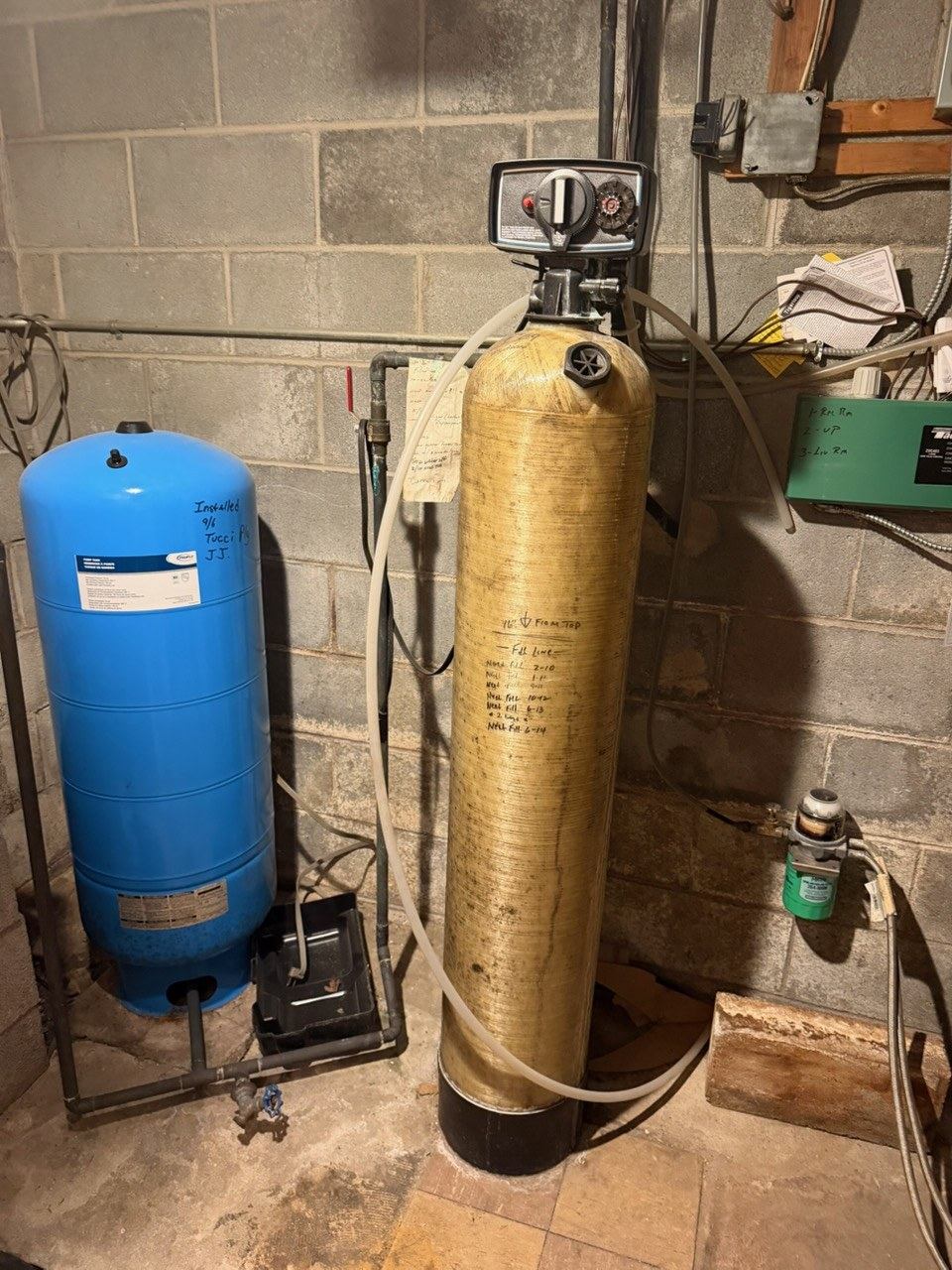
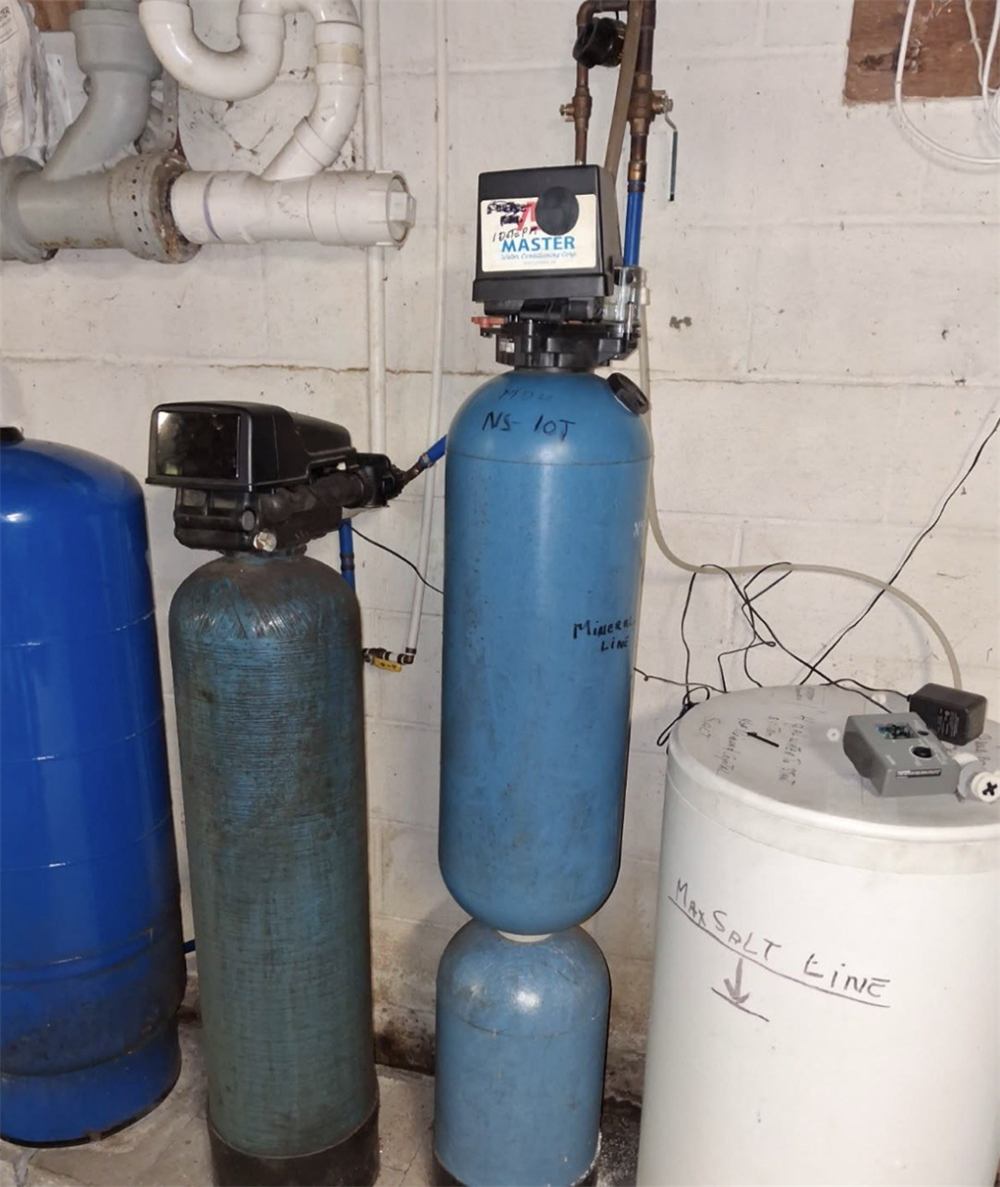
Does Your System Look Like This?
If what's in your basement looks anything like the photo, it's had a long working life and has probably seen better days. Treatment equipment doesn't last forever — media exhausts, valves wear out, and a system sized for a household years ago often isn't sized for the one living there now.
That doesn't automatically mean everything has to go. Sometimes it's a valve or a media change. Either way, give us a call — we'll test the water, take a look at what you've got, and if it needs replacing we'll replace it.
Related Water Problems
FAQ
Well-Water Questions
Periodically, and any time something changes — a new odor, new staining, new cloudiness, or after pump work, heavy rain or a dry spell. Pennsylvania doesn't regulate private wells the way public water systems are regulated, so nobody tests your water but you.
Depth, the formation the well draws from, construction and age all vary between properties. Two wells on the same road can produce meaningfully different water, which is why a neighbour's system isn't a reliable guide to what yours needs.
It depends entirely on how many conditions are present. A well with hardness alone may need one system. A well with sediment, low pH, iron and hardness usually needs several components in a deliberate sequence, because each stage depends on the one before it.
Mortgage-related testing is often limited and focused on specific parameters. That's not the same as a treatment evaluation. Establishing a baseline for hardness, pH, iron, manganese and any odor or sediment concerns early gives you a clear picture of what you're taking on.
Yes. Water quality can shift with season, water table movement, pump changes, nearby construction or heavy rainfall. A reading from several years ago may not describe the water coming out of your tap today.
Well-water treatment across Greater PhiladelphiaPrivate wells are common throughout Bucks, Montgomery and Delaware County.
Next Step
Let's Establish What Your Well Is Actually Producing.
If you've never had a baseline, that's the single most useful thing you can do. Free consultation, no obligation.