
Manganese in Water: Black Specks & Dark Staining | Gridline

Water Problem

Manganese in Water

Manganese produces black, dark brown or purplish-black staining and specks. It frequently occurs alongside iron, and it's generally more difficult to treat — manganese typically requires different conditions to oxidise than iron does, which means a system sized for iron alone may not handle it.

The common story A homeowner installs an iron filter, the orange staining improves, and the black staining stays. That's usually a pH question — and it's solvable once it's identified.

What causes manganese in water?
Dissolved manganese
Which water sources does manganese affect?
Primarily well water
How is manganese usually treated?
Oxidation & filtration
Is testing needed for manganese?
Yes — level and pH both matter

Step One

What You May Notice

  • Black or dark specks in the water, in the toilet tank, or in an ice maker
  • Dark brown or black staining in sinks, tubs and dishwashers
  • Laundry with dark spotting, particularly on lighter fabrics
  • A bitter or metallic taste
  • Black residue on fixtures or collecting in the faucet aerator
  • Dark staining appearing alongside orange iron staining
  • Discolouration that worsens where water sits or is heated
  • Specks that appear after a tap hasn't been used for a while
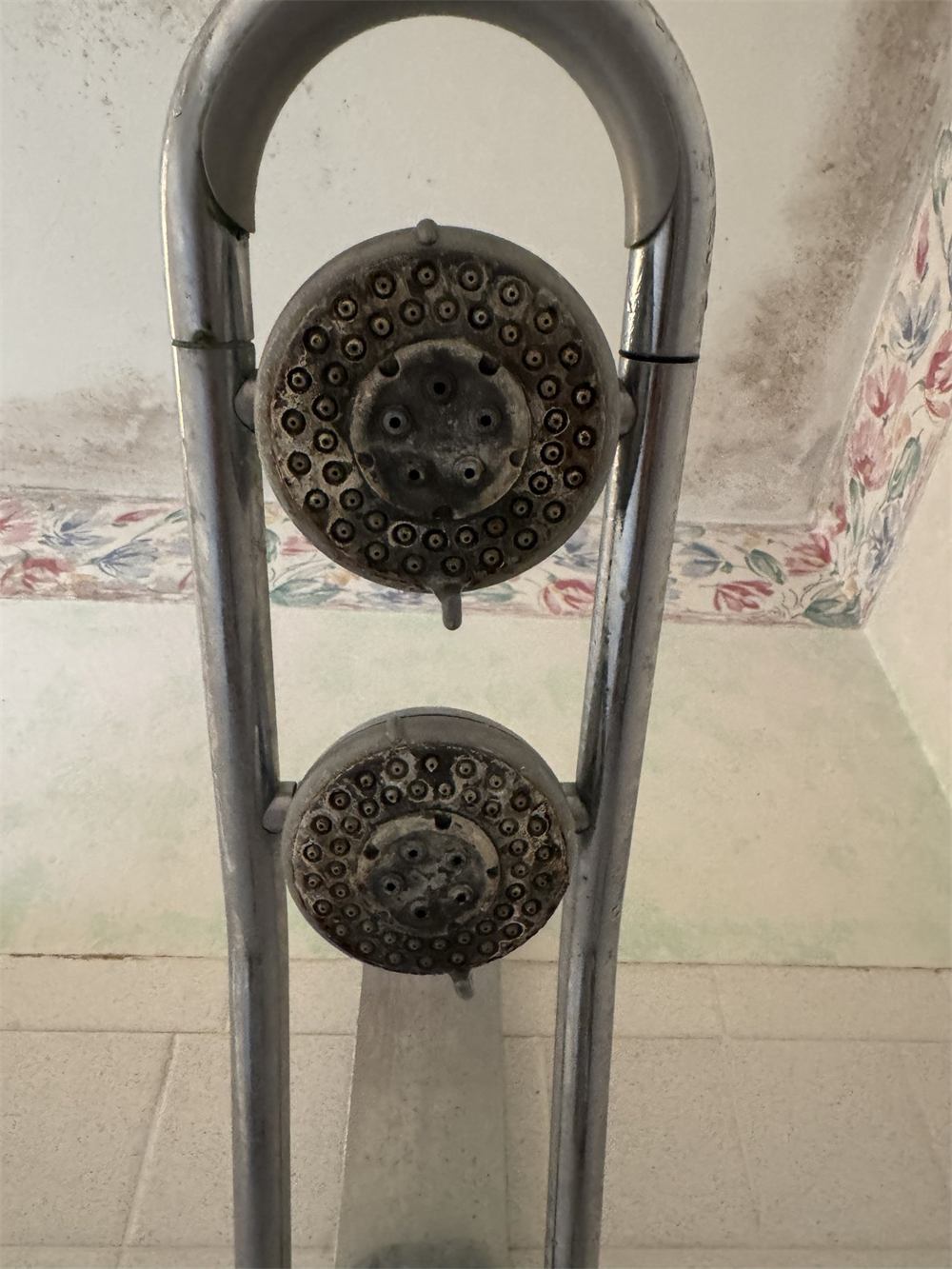
Dark mineral buildup clogging the nozzles of two shower heads, caused by manganese and iron in low-pH well water
A customer's shower heads — the dark buildup in the nozzles is manganese, alongside iron, carried by water with a low pH.

Manganese rarely shows up alone

This home had manganese, iron and low pH all at once — common on private wells. Treating the manganese without correcting pH first would have left the new media fighting the same water chemistry that clogged these fixtures.

Step Two

Common Causes

  • Naturally occurring manganese in groundwater

    Manganese occurs naturally in rock and soil. Groundwater dissolves it as it moves through manganese-bearing formations — the same process that produces iron and hardness.

  • Co-occurrence with iron

    Iron and manganese are frequently found in the same formations, which is why they so often turn up together. That combination is a different design problem from either one alone.

  • Low-oxygen groundwater conditions

    Manganese stays dissolved and invisible in water with little dissolved oxygen. It becomes visible once it meets air and oxidises — which is why staining often appears away from the tap.

  • Accumulated deposits in plumbing

    Manganese that has built up inside pipes over time can slough off, producing black specks that seem to appear from nowhere. Often noticed after a period of low use or a change in flow.

  • Seasonal and water-table variation

    Levels can shift across the year on some wells. A result from one season may not describe another.

Step Three

What Testing Can Tell You

  • Manganese level. The number that determines what the treatment has to handle.
  • Iron level and the ratio between the two. Which one drives the design.
  • pH — the critical one. Manganese generally requires a higher pH to oxidise than iron. If pH is too low, the treatment underperforms regardless of the equipment.
  • Hardness. Affects sequencing if a softener is part of the design.
  • Whether existing equipment is the right design. Plenty of systems we look at were specified for iron and never asked to handle manganese.

More on the process: how Gridline evaluates water. See also: why water testing matters.

On manganese and drinking water

The EPA publishes a secondary (aesthetic) standard for manganese addressing staining and taste, and separately publishes health-based advisory guidance. If your results show manganese and you have health questions, that conversation belongs with a certified laboratory and your county health department or PA DEP — not with a water-treatment company. We'll help you understand the treatment side and defer on the rest.

Step Four

Potential Treatment Approaches

Oxidation followed by filtration

The standard approach — manganese is oxidised into a filterable form and removed by the media. Media selection and the oxidation method both depend on the level and, critically, the pH.

Depends on: manganese level · pH · iron present · backwash flow rate

Manganese treatment

pH correction first

Where pH is too low for manganese to oxidise effectively, raising it is a prerequisite rather than an optional extra. This is frequently the missing piece when an existing system handles iron but not manganese.

Depends on: current pH · alkalinity · whether added hardness is acceptable

Acidic water & pH

Combined iron and manganese treatment

Where both are present, the system is designed around the harder requirement of the two — which is usually manganese. Designing for iron and hoping manganese comes along is how staining persists.

Depends on: both levels · the ratio · pH · flow rate

Softener handling of very low levels

A softener may manage trace dissolved manganese alongside hardness, with the same caveats as iron. It is not a manganese filter and shouldn't be specified as one.

Depends on: level · form · resin type · manufacturer specifications

Water softeners

Step Five

When to Contact Gridline

  • Black specks are appearing in water, appliances or the toilet tank
  • Dark staining returns after cleaning
  • You have an iron filter that handles the orange but not the black
  • You're on a new well with no baseline established
  • Test results show manganese and you're unsure what it means for treatment
  • Laundry is being spotted or discoloured

FAQ

Manganese Questions

Manganese occurs naturally in rock and soil, and groundwater dissolves it as it moves through manganese-bearing formations. It's frequently found alongside iron because the two often occur in the same formations, and low-oxygen groundwater conditions keep both dissolved.

Manganese treatment across Greater PhiladelphiaFrequently found alongside iron on private wells.

Next Step

Black Staining That Won't Go Away?

We'll check the manganese level and the pH together — because one without the other doesn't tell you enough to fix it.

Call Free Consultation