
Service
Water Softener Systems & Installation
A water softener is equipment installed on your main water line that reduces hardness minerals — primarily calcium and magnesium — using a process called ion exchange. It addresses scale, spotting and lather problems. It is not a general-purpose water filter.
The short version If your problem is scale, spots and soap that won't lather, a softener is likely the right category. If your problem is a smell, a stain or a taste, it probably isn't — and we'd rather say so than sell you one.
Is This Your Problem?
Common Signs of Hard Water
Hard water isn't a contaminant — it's dissolved mineral content, mostly calcium and magnesium picked up as groundwater moves through rock and soil. It's extremely common in this region, on both well and municipal supplies.
- White, crusty buildup on faucets, showerheads and around drains
- Spots or cloudy film on glassware and dishes after the dishwasher runs
- Soap and shampoo that won't lather, and using more of both than seems reasonable
- A slick or filmy feeling on skin after showering, or hair that feels dull
- Laundry that comes out stiff or looks dingy over time
- Scale accumulating inside water heaters, kettles, coffee makers and fixtures
Signs point. Readings confirm.
Every item above can have another explanation. A hardness reading tells us whether hardness is actually the issue and — just as importantly — how much of it the system needs to handle. More on what causes hard water and on how we evaluate it.
The Mechanism
How Ion Exchange Works
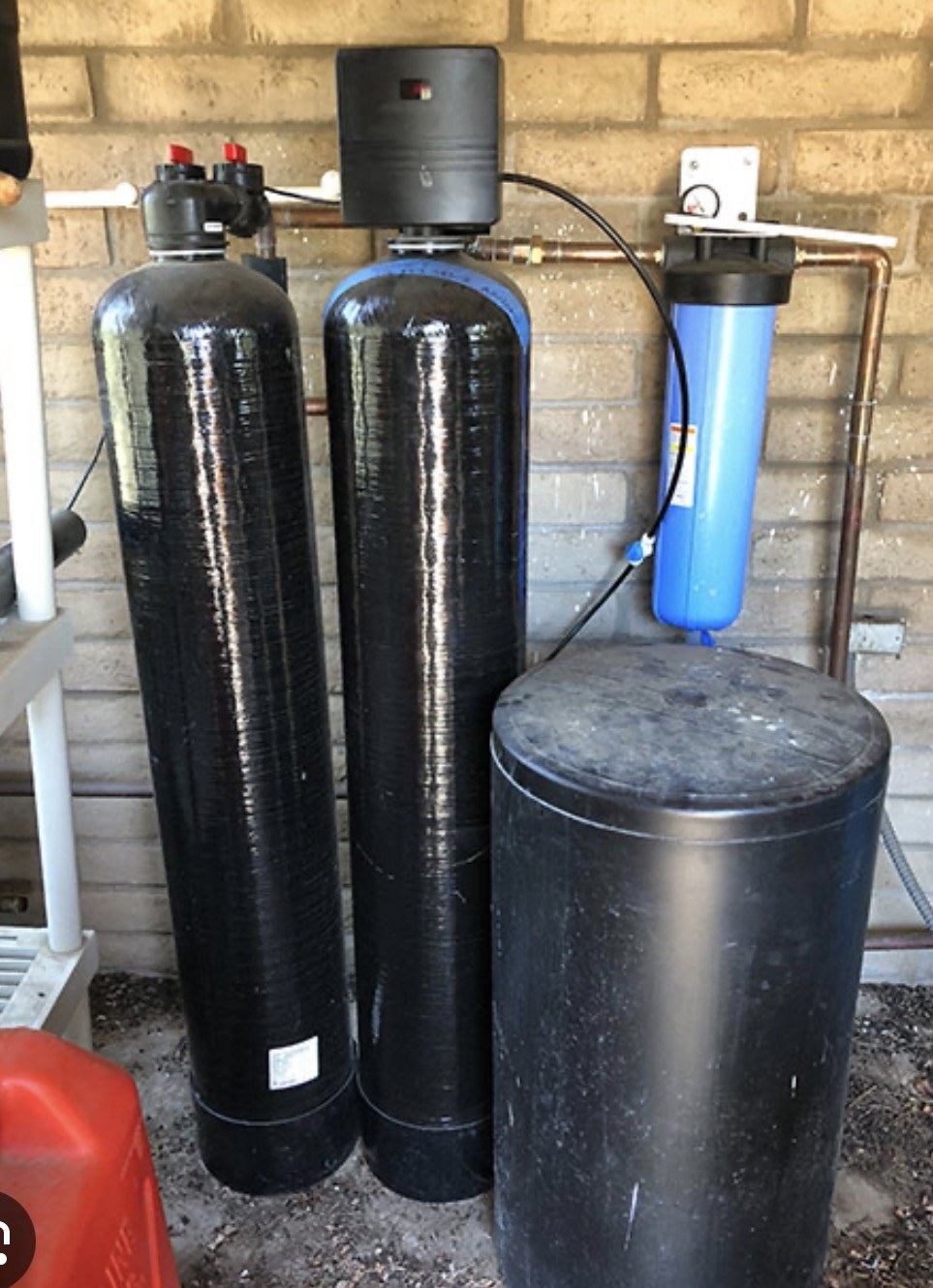
A conventional softener contains a tank filled with resin beads. As water passes through, calcium and magnesium ions are attracted to the resin and swapped for sodium (or potassium) ions already held there. The hardness minerals stay behind on the resin; the water continues into the house with its hardness reduced.
Eventually the resin runs out of exchange capacity. At that point the system regenerates: a brine solution drawn from the salt tank flushes the accumulated hardness minerals off the resin and out to a drain, recharging it for the next cycle. That repeats for the life of the system.
How often regeneration happens depends on how the system is programmed and how much water your household actually uses — which is why correct sizing and correct settings have a direct effect on your salt consumption and your water usage.
Be Clear About This
A Water Softener Is Not a Universal Water Filter
This is the single most common misunderstanding in our industry, and it's the reason some homeowners spend money and stay unhappy. A softener does one job well.
What a softener addresses
- Hardness minerals — calcium and magnesium
- Scale formation in plumbing, water heaters and fixtures
- Spotting and film on glassware and shower doors
- Poor soap and detergent lather
- Limited amounts of dissolved iron, depending on the system and the level present
What it is not designed to address
- Chlorine taste and odor — that's a filtration job
- Sulfur / rotten-egg odor
- Sediment, grit and particulate
- Low pH / acidic water
- Higher levels of iron or manganese
- Bacteriological concerns or broad contaminant removal
Plenty of homes need a softener and something else — for example a softener paired with whole-house filtration for chlorine, or with iron treatment ahead of it on a well. When that's the case we'll explain how the pieces work together and in what order. If you're trying to work out which one your home actually needs, see our breakdown of water softener vs. whole-house filter.
Specification
What Determines the Right Softener
"A softener" isn't one product. These are the factors that change which system is appropriate for a given home.
Water hardness
The measured hardness level sets the capacity the system needs. Guessing here leads to a system that regenerates too often or not often enough.
Household demand
Number of people, number of bathrooms and daily usage patterns determine how much softened water is needed between regenerations.
Peak flow rate
A system that can't keep up with simultaneous showers and appliances creates pressure complaints even when it's sized correctly on paper.
Iron and other conditions
Iron, manganese or sediment may require pretreatment ahead of the softener to protect the resin and get a usable result.
Available space
Basement, utility closet, garage or crawlspace — physical clearance and access for future service both matter, especially in city rowhomes.
Plumbing configuration
Where the main line enters, what needs to be softened, what should bypass (often an outdoor spigot), and how the install ties in.
Drain and electrical access
Regeneration requires a drain connection, and most control valves need power. Distance and code-compliant connection affect the install.
Regeneration type
Metered systems regenerate based on actual usage rather than a fixed schedule, which generally uses less salt and less water.
Salt preference
Sodium chloride or potassium chloride, and how often you're willing to handle bags, is a practical consideration worth discussing upfront.
How We Work
Our Approach to Softener Installations
Free consultation
We talk through what you're noticing, your water source, household size and where your main line enters the home.
Confirm hardness — and check for anything else
Evaluating the water establishes the hardness level and flags conditions like iron that would change the design.
Size and specify
Capacity, flow rate, valve type and regeneration settings are matched to your readings and your actual usage — not to a standard package.
Installation
Our licensed technicians handle installation, including bypass, drain and tie-in.
Setup and walkthrough
We program the system, verify it's operating correctly, and show you how to add salt, what the display is telling you, and what to watch for.
Ongoing service
We stay available afterward for settings adjustments, maintenance and troubleshooting.
Living With It
What Ownership Actually Involves
A softener is not maintenance-free, and we'd rather you know that before you buy one than after.
- Salt. You'll add salt to the brine tank periodically. How often depends on hardness and usage.
- Occasional checks. Confirming the brine tank isn't bridged or crusted, and that the system is regenerating as expected.
- Settings. If your household size changes meaningfully, the programming may be worth revisiting.
- Resin life. Resin degrades over years, faster if it's been fighting iron or chlorine it wasn't protected from.
- Periodic service. Valve components and seals wear. Preventative attention is cheaper than a failure.
More on this in our guide to how often water treatment equipment should be maintained.
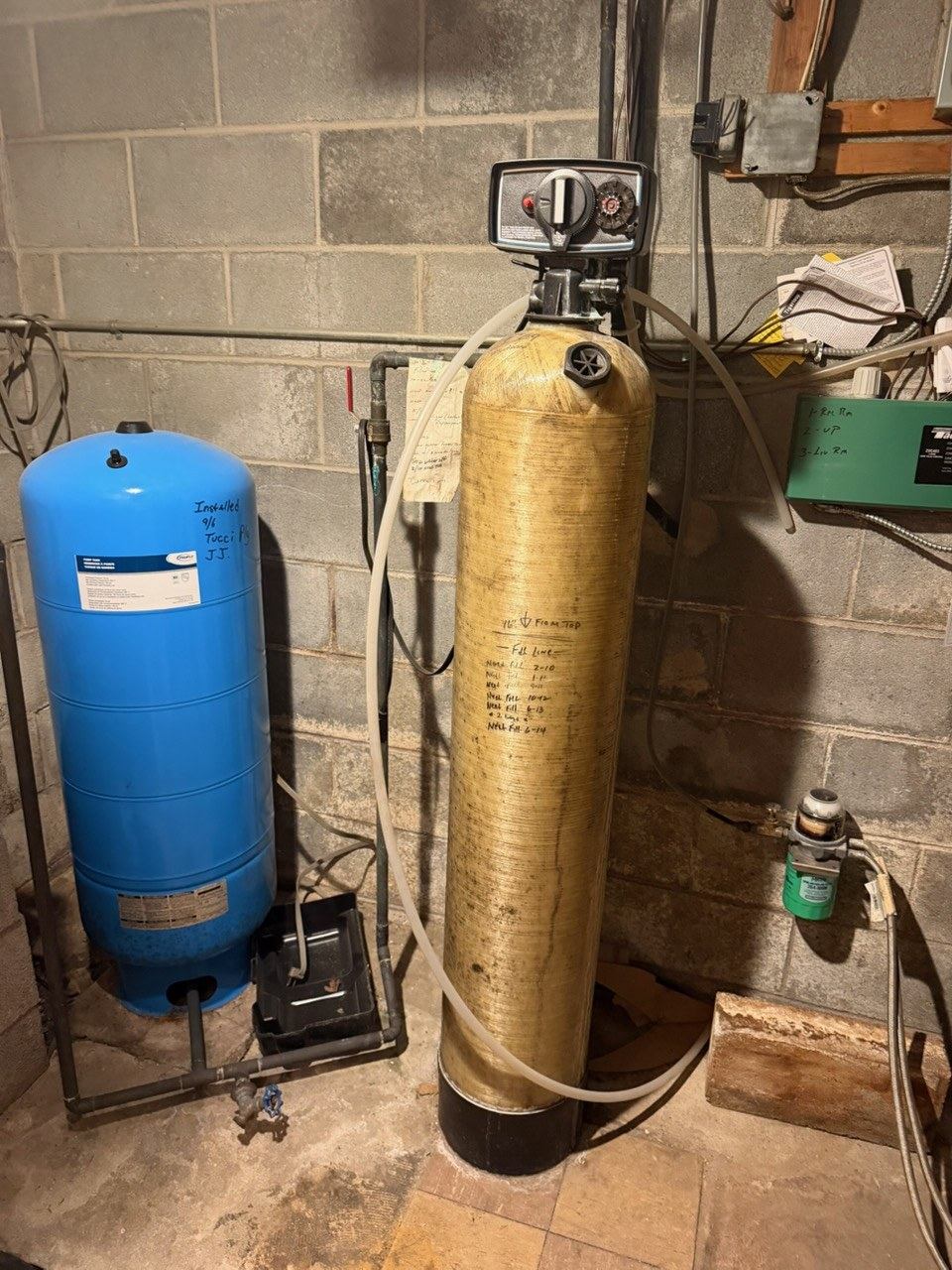
Does Your System Look Like This?
If what's in your basement looks anything like the photo, it's had a long working life and has probably seen better days. Treatment equipment doesn't last forever — media exhausts, valves wear out, and a system sized for a household years ago often isn't sized for the one living there now.
That doesn't automatically mean everything has to go. Sometimes it's a valve or a media change. Either way, give us a call — we'll test the water, take a look at what you've got, and if it needs replacing we'll replace it.
From Our Customers
Softener Installations We've Completed
We recently had Gridline Water Systems install a water softener system at our home in New Hope, PA. Really happy with how everything turned out. The guys were on time, easy to work with and got everything installed without any issues. We've already noticed a difference in the water. Would definitely recommend Gridline Water Systems to anyone in the New Hope or Bucks county area.
Had Gridline install a water softener at our house in Bucks County, PA and everything went great. They were easy to work with, explained everything and answered all my questions. The water already feels a lot better. Would definitely recommend them if you're looking to get a water softener installed in the Bucks County area
Gridline installed our water softener and explained everything clearly. Highly recommend!
Related Reading
FAQ
Water Softener Questions
Not in the way most people mean. A conventional softener uses ion exchange to reduce hardness minerals — primarily calcium and magnesium. It is not designed to address chlorine taste, sediment, sulfur odor, low pH, or most other concerns. Those require different equipment, which is why a softener is often paired with other treatment rather than used alone.
Common indicators include white crusty buildup on faucets and showerheads, spots on glassware, soap that doesn't lather well, and a film on skin after showering. Those are signs, not proof. A hardness reading confirms it and tells us how much hardness the system has to handle — which directly determines sizing.
It depends on your hardness level, household water usage, and how the system is programmed to regenerate. A properly sized system with metered regeneration generally uses noticeably less salt than an oversized system on a fixed timer — one of several reasons sizing is worth getting right.
Some softeners handle limited amounts of dissolved iron, but a softener is not an iron filter. Higher levels, or iron that has already oxidized, generally call for dedicated iron treatment ahead of the softener. Using a softener as a substitute tends to shorten resin life and produce disappointing results.
On the main water line where it enters the home — typically a basement, utility room or garage — with access to a drain and usually an electrical outlet. In tighter spaces like city rowhomes, available clearance and drain routing are part of what we assess during the consultation.
Most people notice it. Soap lathers more readily and rinses differently, which some describe as a slippery feeling at first. It's the absence of the soap-scum reaction hard water produces, and most households adjust within a week or two.
Softener installation across Greater PhiladelphiaSized to your measured hardness and your household.
Next Step
Find Out Whether a Softener Is the Right Call.
We'll look at your hardness level, your household demand and anything else in the water before recommending a system — or telling you that you don't need one.