
Water Treatment Systems & Equipment | Gridline

Products & Systems

The Equipment Behind the Treatment

This isn't a store, and there's nothing to add to a cart. It's an explanation of what the equipment actually is — what each category of system does, where it physically goes in your home, what determines its size, and what owning one involves. The goal is that you understand what's being recommended before anyone recommends it.

Why no model numbers? Because a model number without your water conditions is meaningless. The right system is a conclusion, not a starting point. How we select equipment

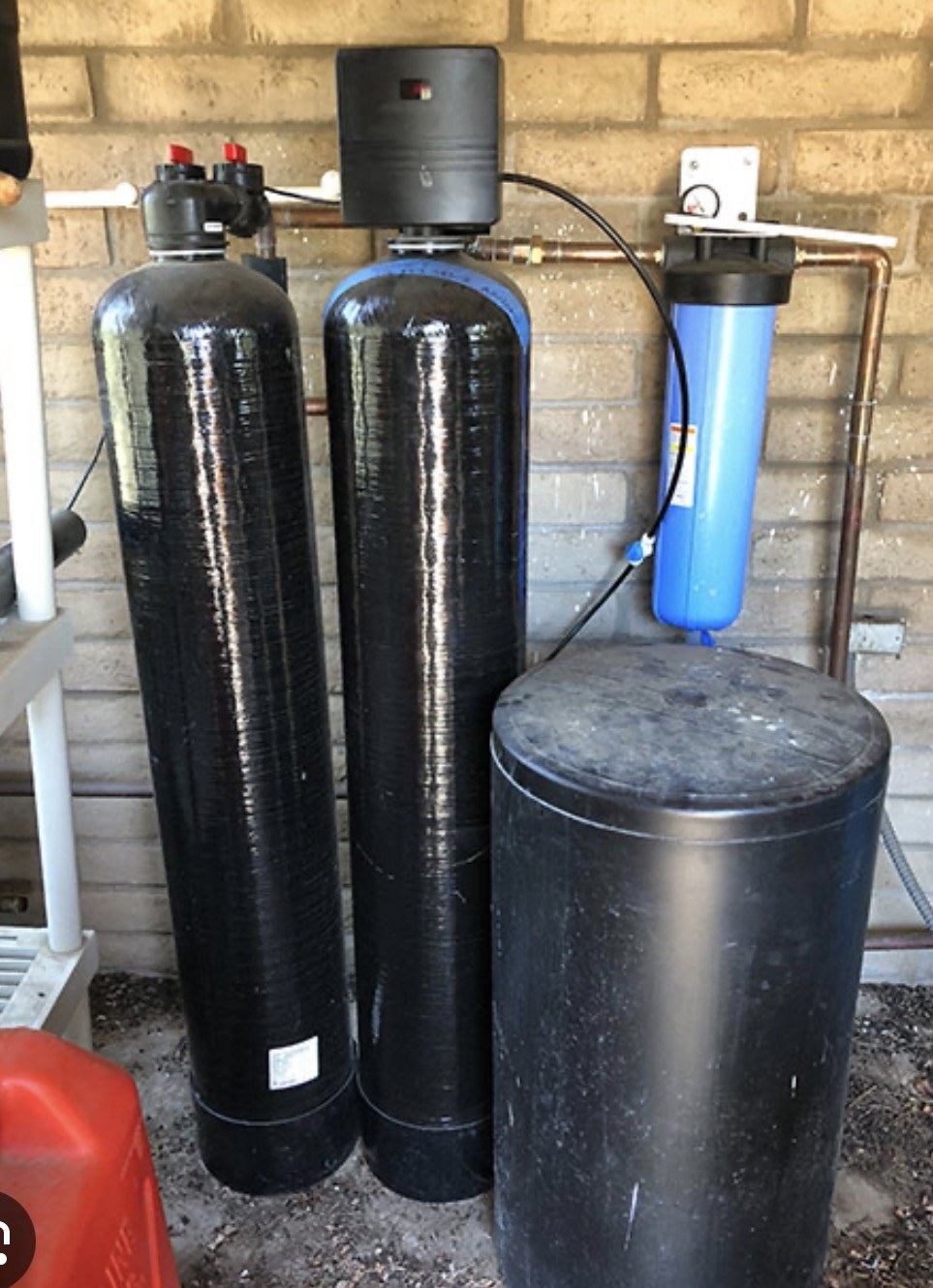
Water softener and filter tanks installed on a residential water line alongside a brine tank
Resin tank, control valve and brine tank — the three parts of a conventional softener.

Category 01

Water Softeners

Physically, a conventional softener is two vessels. A tall narrow tank holds a bed of resin and is topped by a control valve; a shorter, wider tank holds salt and the brine solution. The two are connected by a small tube, and the system needs a drain line and usually a standard outlet.

Where it installs

On the main water line where it enters the home — basement, utility room, garage or crawlspace — typically ahead of the water heater, with a bypass so the system can be isolated for service.

What determines size

Your measured hardness, household demand, peak flow rate and whether iron is present. Capacity is a calculation, not a package tier.

What ownership involves

Adding salt periodically, occasional checks that the brine tank isn't bridged, and eventual resin and valve-component service.
Water softener systems

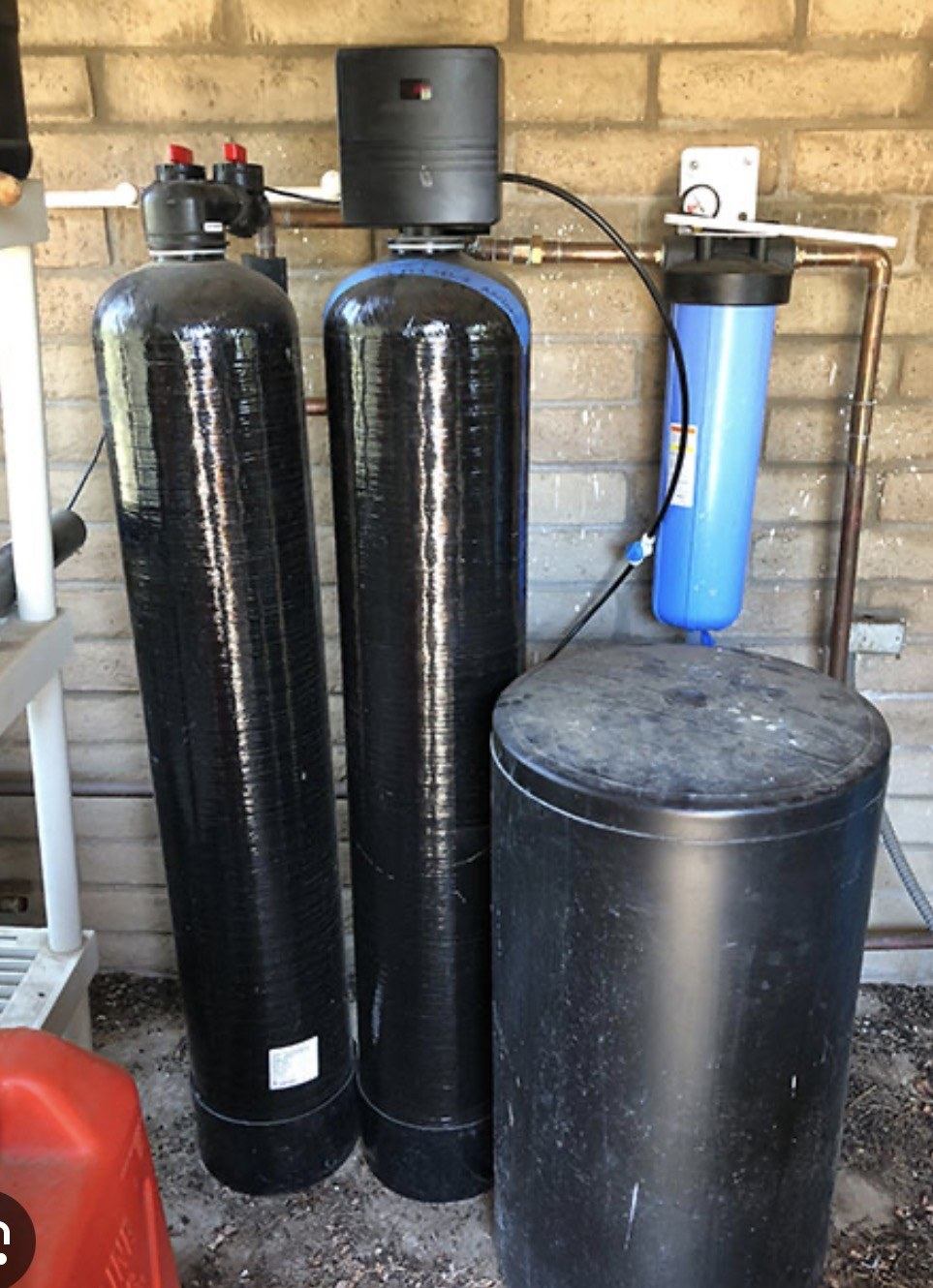
Three-stage whole-house filtration system plumbed into a residential main water line
A staged point-of-entry system, with bypass and pressure gauge.

Category 02

Whole-House Filtration Systems

These take two general forms. A media tank looks similar to a softener's resin tank and contains a bed of filter media that water flows through; many backwash periodically and need a drain. A cartridge system uses one or more housings holding replaceable filter elements — smaller, less expensive, and generally requiring more frequent attention.

The media is what does the work. Different media address different things, which is why "whole-house filter" describes a category rather than a product.

Where it installs

At the point of entry, ahead of branch lines and the water heater, so every fixture in the house receives treated water.

What determines size

The target concern, required contact time, your peak flow rate, and the physical space and drain access available.

What ownership involves

Media replacement or cartridge changes on a schedule that depends on the media type, your water and your usage.

Whole-house filtration

Category 03

Well-Water Systems

Homeowners often expect a "well system" to be a single tank. In practice it's usually several components installed in a deliberate order — sediment filtration first, then whatever the water chemistry calls for, then softening if hardness is present.

The sequence matters as much as the parts. pH correction frequently has to come before iron or manganese treatment, because those processes depend on adequate pH to work at all. Get the order wrong and individually correct components can still produce a poor result.

This is the category where we most often find equipment that's working exactly as designed and still not solving the homeowner's problem.

Well-water treatment

Typical sequence

Sediment → pH correction → iron / manganese / sulfur → softening

Where it installs

Downstream of the pressure tank, typically in a basement or utility space. Multi-stage systems need meaningful floor area and clearance above the tanks for media service.

What determines size

Test results, well yield and flow rate, household demand, and how many conditions have to be addressed together.

What ownership involves

More service points than a single system — media, salt, filters and periodic verification that each stage is still doing its job.

Category 04

Reverse Osmosis Systems

A residential RO system is a compact assembly that fits inside a sink cabinet: a manifold of filter stages, a membrane housing, a small pressurised storage tank, and a dedicated faucet mounted at the sink. It also needs a drain connection for the water the membrane rejects.

RO is point-of-use. It treats water at one tap. It doesn't soften your home's water, and it doesn't treat what comes out of your shower.

Where it installs

Under the kitchen sink in most cases, with the faucet in an existing or newly drilled hole. Can sometimes be tied to a refrigerator or ice-maker line.

What determines size

Household drinking demand, cabinet space, water pressure, and feed-water conditions — hardness and sediment shorten membrane life, which is why pretreatment is often part of the conversation.

What ownership involves

Pre- and post-filter changes on a schedule, membrane replacement at a longer interval, and sanitisation at service.

Reverse osmosis systems

Category 05

Specialty Treatment Systems

Externally, most specialty systems look similar to one another — a media tank with a control valve on top. What's inside is the difference: neutralising media for raising pH, oxidising media for iron and manganese, sediment media, and in some cases a chemical feed pump and solution tank alongside the tank.

This is the category where the gap between "looks the same" and "does the same thing" is widest, and where specifying from a symptom rather than a test result goes wrong most often.

Specialty water treatment

What's inside

Neutralising media · oxidising media · sediment media · chemical feed systems with a solution tank and metering pump

Where it installs

In sequence with the rest of the treatment train, positioned according to what each stage needs from the one before it.

What determines size

The specific condition, its concentration, the water's pH, required backwash flow rate, and what else is being treated alongside it.

What ownership involves

Periodic media replenishment or replacement, and — for chemical feed systems — solution refills and pump maintenance.

How We Choose

How Gridline Selects Equipment

We're not loyal to a manufacturer. We're loyal to getting the specification right, which means these are the inputs — in this order.

  1. What the water actually contains

    Readings first. Everything downstream of this is a consequence of it.

  2. How much treatment the household requires

    Occupants, fixtures, peak simultaneous demand and daily volume determine capacity and flow requirements.

  3. What the space and plumbing allow

    A perfect specification that won't fit through your basement door or reach a drain isn't a specification. A real constraint in rowhomes and finished basements.

  4. Whether the components work together

    Sequence, compatibility and whether one stage is protecting or fouling the next.

  5. Serviceability over the long term

    Parts availability, access for maintenance, and whether the ongoing upkeep is something you'll realistically keep up with.

  6. Verified manufacturer specifications

    Performance expectations come from the manufacturer's current documented specifications for that model — not from a general claim about a category.

What You Won't Find on This Page

We don't publish flow rates, grain capacities, micron ratings, removal percentages or certification marks here. Not because we're hiding them — because those numbers are specific to a model, and a number without your water conditions next to it isn't information, it's marketing. When we recommend a specific system, you'll get its actual documented specifications, and you're welcome to verify them with the manufacturer.

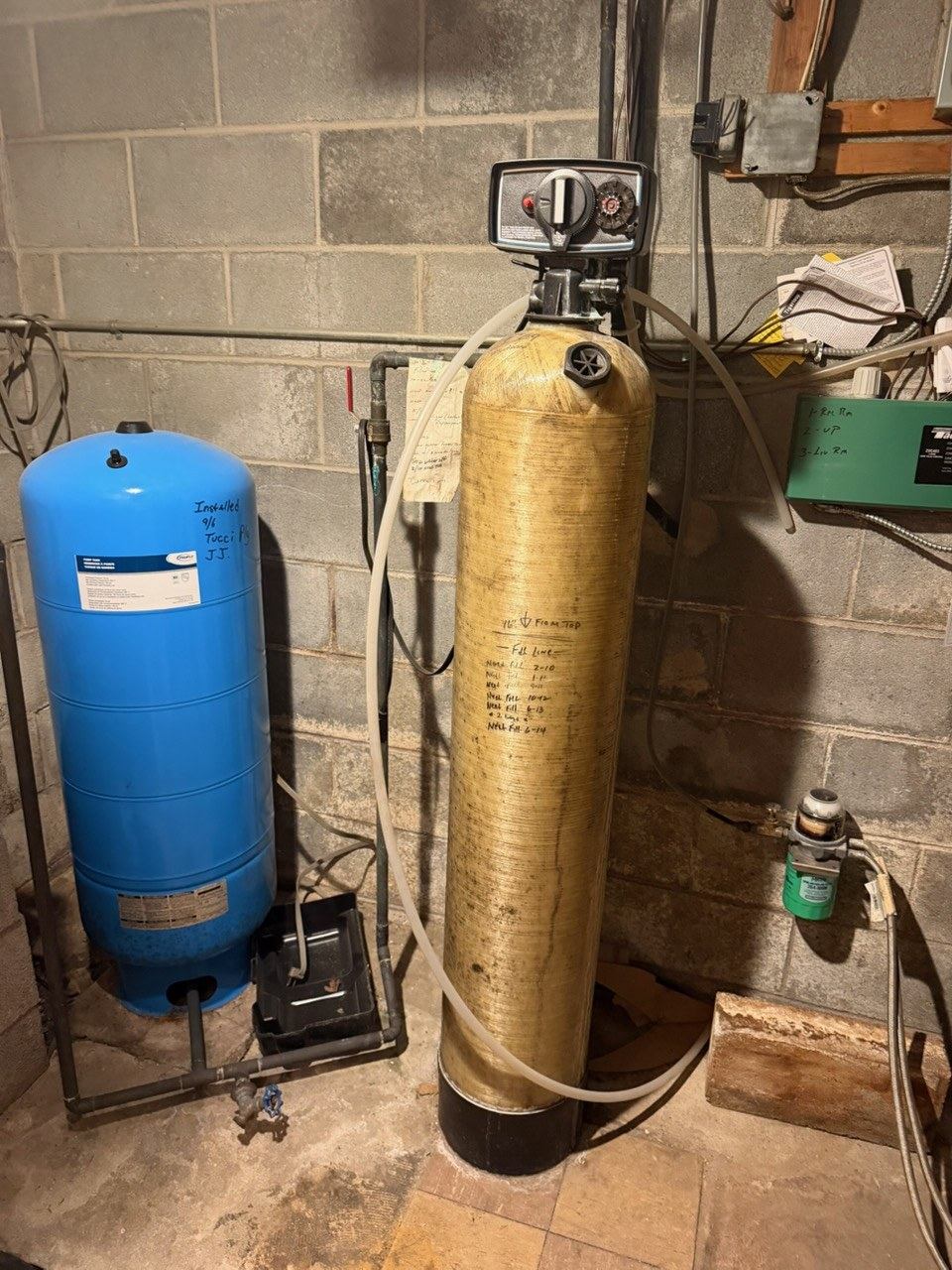
An older water treatment tank in a basement, showing years of service

Does Your System Look Like This?

If what's in your basement looks anything like the photo, it's had a long working life and has probably seen better days. Treatment equipment doesn't last forever — media exhausts, valves wear out, and a system sized for a household years ago often isn't sized for the one living there now.

That doesn't automatically mean everything has to go. Sometimes it's a valve or a media change. Either way, give us a call — we'll test the water, take a look at what you've got, and if it needs replacing we'll replace it.

FAQ

Equipment Questions

Talk to us about what you have in mind. Our usual approach is supply and installation together, because a system that's sized wrong or plumbed incorrectly won't perform regardless of how good the equipment is — and we'd rather stand behind the whole result.

Installed across Greater PhiladelphiaSystems supplied, installed and serviced throughout our coverage area.

Next Step

Find Out Which System Your Home Actually Needs.

We'll look at the water first. The equipment conversation comes after that, and it'll make a lot more sense when it does.

Call Free Consultation