
Service
Whole-House Water Filtration
A whole-house filtration system is installed at the point where water enters your home, so that every tap, shower and appliance receives treated water. What it actually reduces depends on the filter media selected — which is why the water gets evaluated before the media is chosen.
An honest caution "Whole-house filter" is a category, not a product. Anyone telling you one filter handles everything in your water is either simplifying heavily or overselling.
The Basics
Point of Entry, Not Point of Use
Whole-house filtration is described as point-of-entry treatment. The system is plumbed into the main line where water arrives in the home, typically ahead of the water heater, so treated water is distributed to every fixture rather than a single faucet.
That's the difference between it and something like reverse osmosis, which is point-of-use — excellent for drinking water at the kitchen sink, but not designed to treat what comes out of your shower.
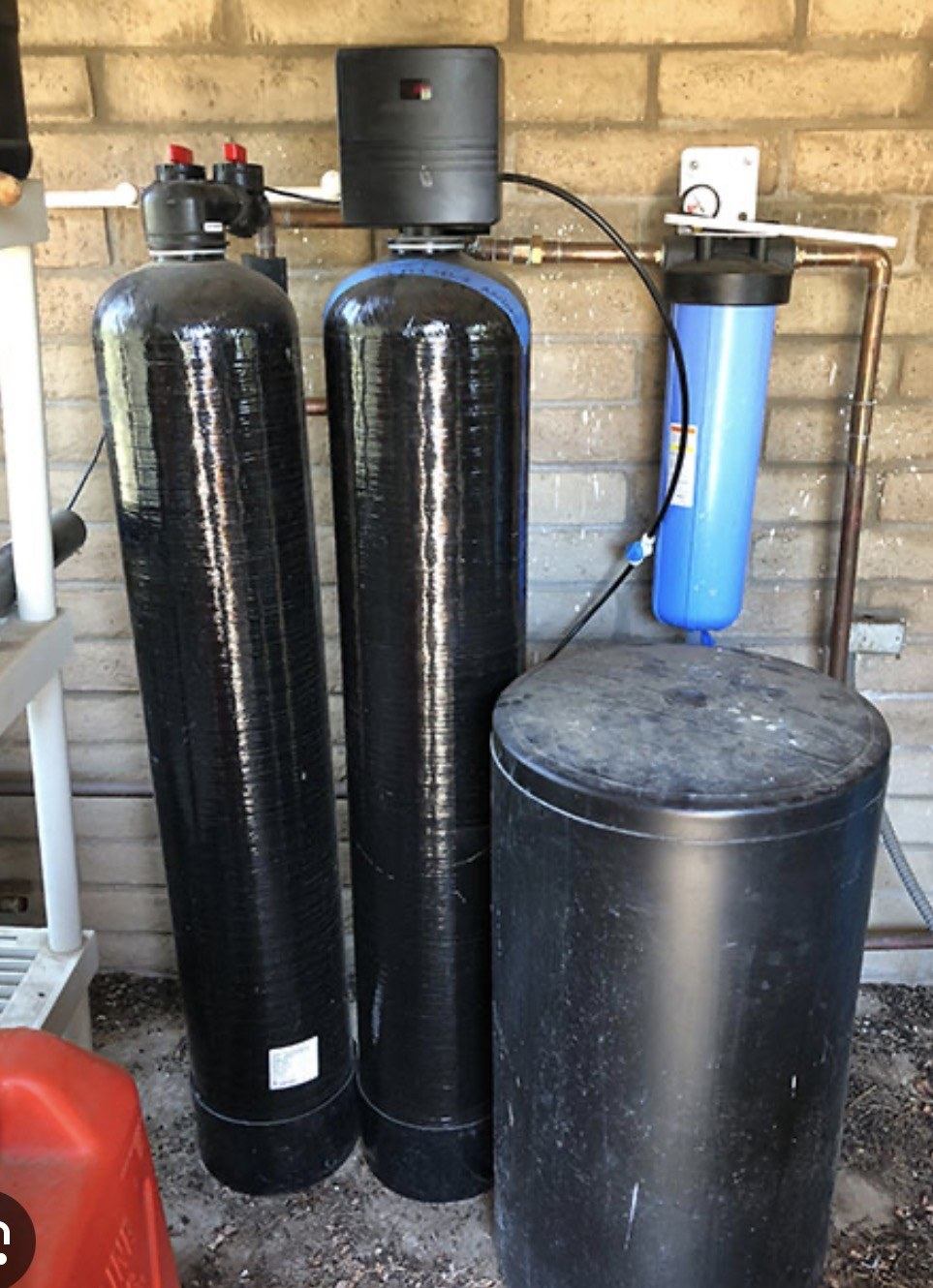
Inside, most whole-house systems are either a tank containing a bed of filter media that water flows through, or a housing holding replaceable cartridges. The media is the part that does the work, and different media address different things. Choosing media without knowing what's in the water is guessing.
Treatment Goals
What Whole-House Filtration Can Be Used For
Depending on the media and system design selected for your water, whole-house filtration is commonly used to address:
- Chlorine taste and odor on municipal supply — a common request in Philadelphia and throughout Montgomery County
- Sediment and particulate — grit, cloudiness and debris that clogs aerators and fixtures
- Certain unwanted compounds — depending on the specific system, media and verified manufacturer specifications
- Certain well-water conditions — when the media is properly matched to what testing identifies
- Protecting downstream equipment — filtration ahead of a softener or RO system to extend its life
What determines the answer
Notice how often the phrase "depending on the media" appears above. That isn't hedging — it's the actual engineering reality. A carbon-based system, a sediment system and an oxidising media system are all "whole-house filters," and they do entirely different jobs. Testing is what turns that category into a specific answer.
The Key Distinction
Whole-House Filter vs. Water Softener
These get confused constantly. They are not competing products — they are different tools for different problems, and some homes need both.
| Water Softener | Whole-House Filter | |
|---|---|---|
| Primary purpose | Reduce hardness minerals (calcium, magnesium) | Reduce specific substances based on the media selected |
| How it works | Ion exchange — hardness swapped onto resin, flushed out during regeneration | Water passes through filter media or cartridges that capture or chemically reduce targets |
| Typically addresses | Scale, spotting, soap lather, buildup in fixtures and appliances | Chlorine taste and odor, sediment, and other targets depending on design |
| Does not address | Chlorine, sulfur odor, sediment, low pH, higher iron levels | Hardness — a filter does not soften water |
| Consumables | Salt, plus eventual resin replacement | Media replacement or cartridge changes on a schedule |
| Needs a drain | Yes — for regeneration | Backwashing media systems yes; many cartridge systems no |
| Choose it when | Hardness is confirmed by a reading and scale or lather is your complaint | Your complaint is taste, odor or particulate rather than scale |
If you have hard water and a chlorine taste, one piece of equipment will not solve both. That combination is common on municipal supply in this region, and it's usually addressed with filtration and softening working in sequence. We'll explain the order and why it matters. Longer read: Water Softener vs. Whole-House Filter.
Specification
What Determines the Right System
Your water source
Municipal and well water present fundamentally different filtration problems. This is the first question, every time.
What testing identifies
The media selection follows the readings. Reversing that order is how homeowners end up filtering for something they never had.
Target concern
Chlorine, sediment and specific compounds each call for different media — sometimes more than one stage in sequence.
Peak flow rate
Media beds need adequate contact time. Undersizing for your home's peak demand causes both pressure complaints and poor performance.
Cartridge vs. media tank
Cartridge systems cost less upfront and need more frequent changes. Backwashing media tanks cost more and need a drain.
Space and access
Tank height and clearance for media service matter — a real constraint in rowhomes and finished basements.
Sequence with other equipment
Where filtration sits relative to a softener or RO system affects the performance and lifespan of everything downstream.
Maintenance you'll realistically do
The best system is one that gets serviced. We'd rather specify something you'll keep up with.
Verified specifications
Performance expectations should come from the manufacturer's documented, current specifications — not from us guessing.
How We Work
Our Approach to Filtration Systems
Free consultation
We establish your water source, what you're noticing, and where in the house you notice it — the shower and the kitchen tap point to different answers.
Evaluate the water
Testing identifies what's actually present. On municipal supply that includes confirming whether your utility uses chlorine or chloramine.
Select media and size the system
Media type, tank size, contact time and flow rate are chosen against your readings and your household's peak demand.
Plan the sequence
If you also need softening or RO, we determine what goes where so each stage protects the next.
Installation
Our licensed technicians handle installation, including bypass and any drain connection.
Service schedule
We tell you when media or cartridges will need attention, and we stay available to handle it.
From Our Customers
Filtration Systems We've Installed
Robert and Ryan from Gridline Water Systems installed a whole-house filtration system for us and made the process really easy. They explained what they were doing, answered all our questions, and everything was left clean when they finished. We're already noticing a difference in the water. Great experience with the guys and I'd definitely recommend them for whole-house water filtration in the Blue Bell area.
We noticed our water had a strange taste and smell, so we reached out to Gridline Water Systems. They explained everything and installed a whole house filtration system for us. The water already tastes and smells much better, and we're really happy with the work.
Highly recommend Gridline Water Systems! They installed a whole-home water filtration system for us and did an excellent job. The team was professional, knowledgeable, and made the entire process easy. If you're looking for a reliable water filtration company in Bucks County, PA, definitely give Gridline a call. Great service, fair pricing, and quality work!
Related Reading
FAQ
Whole-House Filtration Questions
A softener reduces hardness minerals through ion exchange, addressing scale, spotting and lather. A whole-house filter uses filter media to reduce other things — chlorine taste and odor, sediment — depending entirely on which media is used. They solve different problems, and a home with both hard water and a taste concern may need both.
No. There's no single filter that addresses every possible concern. What a system reduces depends on the media selected, the system design, the flow rate and the condition of the incoming water. That's why the media is chosen after the water is evaluated, not before.
At the point of entry — where the main water line comes into the home, ahead of the water heater and the branch lines. That placement is what allows it to treat water going to every fixture rather than just one tap.
Some homeowners on municipal supply install one specifically for chlorine taste and odor throughout the house, including showers. Others are satisfied with point-of-use treatment at the kitchen tap. Whether it's worthwhile depends on what's bothering you and where you notice it — if it's the shower, point-of-use won't help.
It depends on the media type, the system size, your water conditions and your household usage. Cartridge-based systems generally need more frequent attention than larger backwashing media tanks. We set expectations for your specific system at installation.
Filtration across Greater PhiladelphiaMedia matched to your water, not to a default package.
Next Step
Let's Work Out Which Media Your Water Needs.
Tell us what you're tasting, smelling or seeing. We'll test the water and specify filtration that targets it — rather than a package that targets everything and nothing.