
Iron, Sulfur & pH Water Treatment | Greater Philadelphia & Suburbs

Service

Specialty Water Treatment

Some water conditions don't respond to general-purpose equipment. Iron, manganese, sulfur, sediment and low pH each call for treatment matched to the specific chemistry present — including how much is there and what form it's in.

There is no universal specialty system If a company recommends specialty equipment before seeing your water, it's worth asking what they based it on.

Category 01

Iron Treatment

Iron produces orange, red or brown staining and a metallic taste. The critical distinction is the form it's in. Dissolved (clear-water) iron looks clear at the tap and turns orange after sitting. Oxidised (red-water) iron arrives already discoloured.

Most approaches involve converting dissolved iron into a filterable form and then removing it. Which media and which oxidation method suit your water depends on the level, the pH, and whether manganese is present alongside it. Iron bacteria — a slimy reddish residue in toilet tanks and fixtures — is a different problem again and often requires disinfecting the well as well as filtering.

Iron in water, explained

Depends on

Iron level · dissolved vs. oxidised · pH · manganese · required backwash flow rate

Commonly paired with

Sediment prefiltration ahead of it; softening downstream where hardness is also present

Not solved by

A water softener alone, beyond limited dissolved-iron levels
Category 02

Manganese Treatment

Manganese shows up as black or dark brown specks and staining — in the toilet tank, on fixtures, in the dishwasher, on laundry. It's frequently found alongside iron and is generally the harder of the two to treat.

The reason is pH. Manganese typically needs a higher pH to oxidise than iron does, which means a system sized and configured for iron alone may handle the orange and leave the black behind. Where pH is too low, correcting it first isn't optional — it's what makes the rest of the treatment work.

Manganese in water, explained

Depends on

Manganese level · iron level and ratio · pH · flow rate

Often requires

pH correction ahead of treatment where the water is acidic

Common mistake

Specifying for iron alone and expecting the manganese to come with it

Category 03

Sulfur / Hydrogen Sulfide Treatment

The rotten-egg smell. Before anything is specified, one question matters more than any other: is the smell in all your water, or only the hot?

Hot-water-only odor usually points to the water heater rather than the supply — a reaction involving the heater's anode rod. That's addressed at the heater, and installing whole-house treatment won't fix it. Where the odor is in the cold water too, the source is the supply, and treatment generally involves oxidation followed by filtration, or aeration, depending on the concentration and what else is present.

Why water smells like rotten eggs

Depends on

Concentration · pH · iron and manganese present · whether bacteria are a factor

First step

Establish whether it's the supply or the water heater — they're different fixes

Not solved by

A water softener. If someone suggests one for a sulfur smell, ask what they're basing it on.

Category 04

Sediment Filtration

Sand, silt, clay, rust flakes or scale particles carried along in the water. It clouds the water, collects in fixtures, fouls aerators and wears on valves and any equipment downstream.

Filtration here is straightforward in principle but the right filter depends on what the particles actually are and how much of them there is. Light, consistent loads suit cartridge filtration. Heavier loads call for a backwashing system so you're not changing cartridges constantly. Larger, heavier material like sand may need a spin-down separator ahead of everything else.

Sediment filtration is almost always the first stage — it's what protects everything behind it.

Sediment in water, explained

Depends on

Particle size and type · load · flow rate · whether it's constant or intermittent

Position

First in the sequence, protecting softeners, media tanks and RO membranes

Worth checking

Sudden sediment on a previously clean well can indicate something about the well itself

Category 05

Acid Neutralisation & pH Correction

Acidic water — pH below neutral, usually with low alkalinity — is corrosive to metal plumbing. The clearest signs show up on your pipes and fixtures: blue-green staining, accelerated corrosion of fittings, and in more advanced cases pinhole leaks in copper pipe.

The common approach is a neutralising filter, where water passes through a bed of media that dissolves slowly and raises pH. It's effective and straightforward, with one consequence worth knowing upfront: it generally adds hardness, which is why a softener frequently follows it. Where pH is very low, or where adding hardness isn't desirable, a metered chemical feed may be the better route.

pH correction also has to come first when iron or manganese treatment depends on adequate pH to function.

Acidic water, explained

Category 06

Specialty Well-Water Treatment

Most specialty work we do is on private wells, and most of those wells have more than one condition. Iron with hardness. Sulfur with iron. Low pH keeping everything dissolved and making the rest harder to treat.

That's a design problem rather than a product problem. The answer is a staged system where each component handles one thing and protects the next, in an order determined by the chemistry — not by what's easiest to install.

Well-water treatment

Typical sequence

Sediment → pH correction → iron / manganese / sulfur → softening

Why order matters

Each stage depends on the one before it. Correct components in the wrong order still underperform.

Design input

Test results · well yield · flow rate · household demand · space and drain access

The Honest Answer

Why There Is No Single Specialty System

Externally, most of this equipment looks similar — a media tank with a control valve on top. What's inside, and what it's configured to do, is where the difference lives.

  • Concentration

    The same condition at two different levels can call for two different approaches.

  • Dissolved vs. oxidised state

    Iron in particular behaves completely differently depending on its form.

  • pH interaction

    Several oxidation processes only work above a certain pH. Below it, the treatment underperforms regardless of the equipment.

  • Co-occurring conditions

    Iron plus manganese plus sulfur isn't three separate problems — it's one design problem.

  • Required backwash flow

    Media systems need a minimum flow to clean themselves. A low-yield well limits what's viable.

  • Sequence dependency

    What goes first changes what's possible downstream.

  • Maintenance implications

    Different media have different replenishment schedules. That belongs in the decision, not after it.

  • Seasonal variability

    Some wells shift across the year. A system specified from one sample may meet a different water in six months.

  • Verified specifications

    What a given media does comes from documented manufacturer data, not from a general claim about the category.

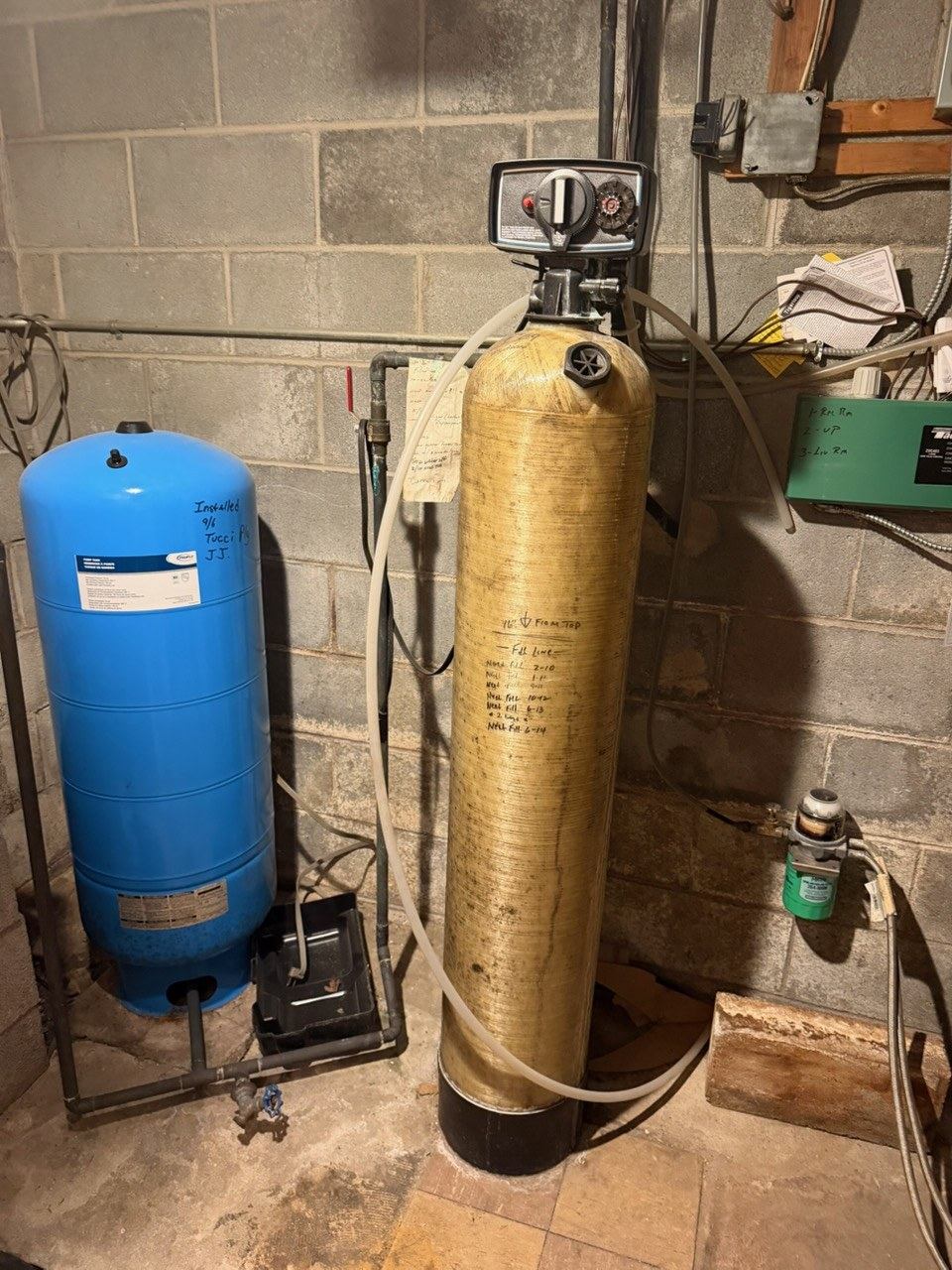
An older water treatment tank in a basement, showing years of service

Does Your System Look Like This?

If what's in your basement looks anything like the photo, it's had a long working life and has probably seen better days. Treatment equipment doesn't last forever — media exhausts, valves wear out, and a system sized for a household years ago often isn't sized for the one living there now.

That doesn't automatically mean everything has to go. Sometimes it's a valve or a media change. Either way, give us a call — we'll test the water, take a look at what you've got, and if it needs replacing we'll replace it.

FAQ

Specialty Treatment Questions

Clear-water iron is dissolved — the water looks clear at the tap and turns orange after sitting, as the iron oxidises on contact with air. Red-water iron has already oxidised and arrives visibly discoloured. They're treated differently, which is why the form matters as much as the level. Fill a clear glass and let it sit twenty minutes — that tells you which you have.

Specialty treatment across Greater PhiladelphiaMatched to your water chemistry, not a default product.

Next Step

Let's Identify What's Actually Going On.

Describe the staining, the smell or the taste. We'll evaluate the water, work out what's causing it, and design treatment around the chemistry rather than the symptom.

Call Free Consultation